
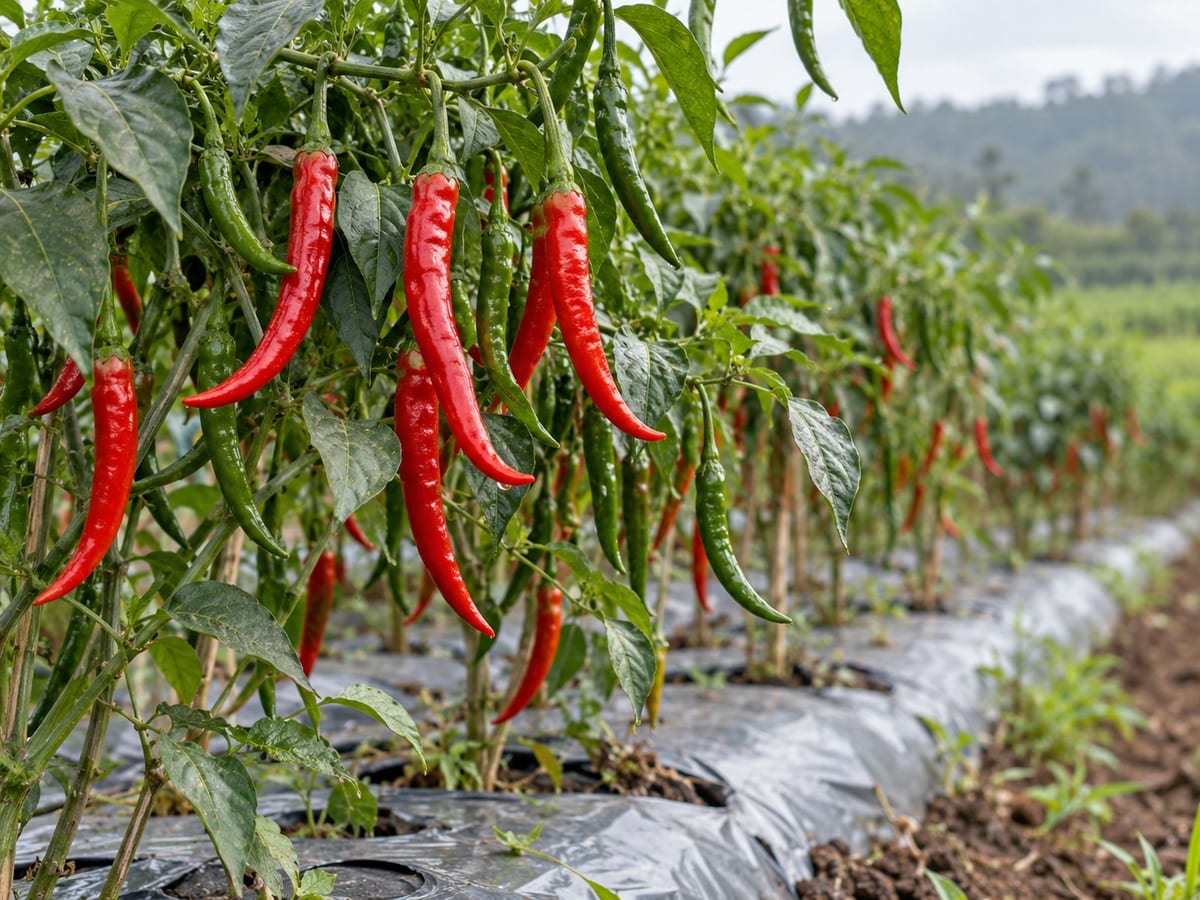
Vegetables · Short-lived perennial grown as an annual

Chili

Capsicum annuum, C. frutescens · Cabai · Solanaceae

A high-value crop with a short cycle and frequent picking. Most losses come from waterlogging, anthracnose fruit rot, bacterial wilt and insect-spread viruses, so raised beds, clean seed and close monitoring do most of the work.

  • Tropical & subtropical
  • Annual

Summary of cited sources. TERAknow summarises published guidance from the sources linked on each page. Recommendations are general, not guaranteed: results depend on your soil, climate and variety, so confirm with local extension staff or an agronomist before acting.

Key facts

Site and soil at a glance

Soil
Well-drained, fairly fertile loam[1]
Soil pH
5.5 to 6.8; lime if below 5.6[1]
Beds
15 to 30 cm high, 1.0 to 1.2 m wide[1]
Spacing
60 cm in the row; about 11,000 to 19,000 plants/ha[1]
Transplant
Seedlings 4 to 6 weeks old[2]
Harvest
Every 3 to 4 days over 3 to 6 months[1]
Soil pH band: 5.5 to 6.8
Good practice

Practices by growth stage

Pick a stage, topic or approach to narrow the list. Open a card for technical detail and its sources.

Growth stage
Topic
Approach

Showing 15 of 15 practices.

    • Core practice
    • Establishment
    • Stage: Nursery

    Treat seed and raise seedlings under cover

    Anthracnose can be carried on seed, and thrips and viruses attack young seedlings. Treat seed, use clean media and screen the nursery.

    Technical detail
    • Hot-water treatment: 52°C for 30 minutes, timed with a thermometer (Pacific Pests & Pathogens). Balitsa describes soaking at 50°C for about an hour.
    • Balitsa: seedbed 1 m wide, facing east, under clear plastic roofing, enclosed with fine netting against thrips.
    • Media: fine soil and manure 1:1, steam-sterilized. Check seedlings for leaf spots before moving them to the field.
    Regions
    Indonesia · Pacific
    Confidence
    High confidence: several institutional sources agree
    • Core practice
    • Soil & nutrition
    • Stage: Field establishment

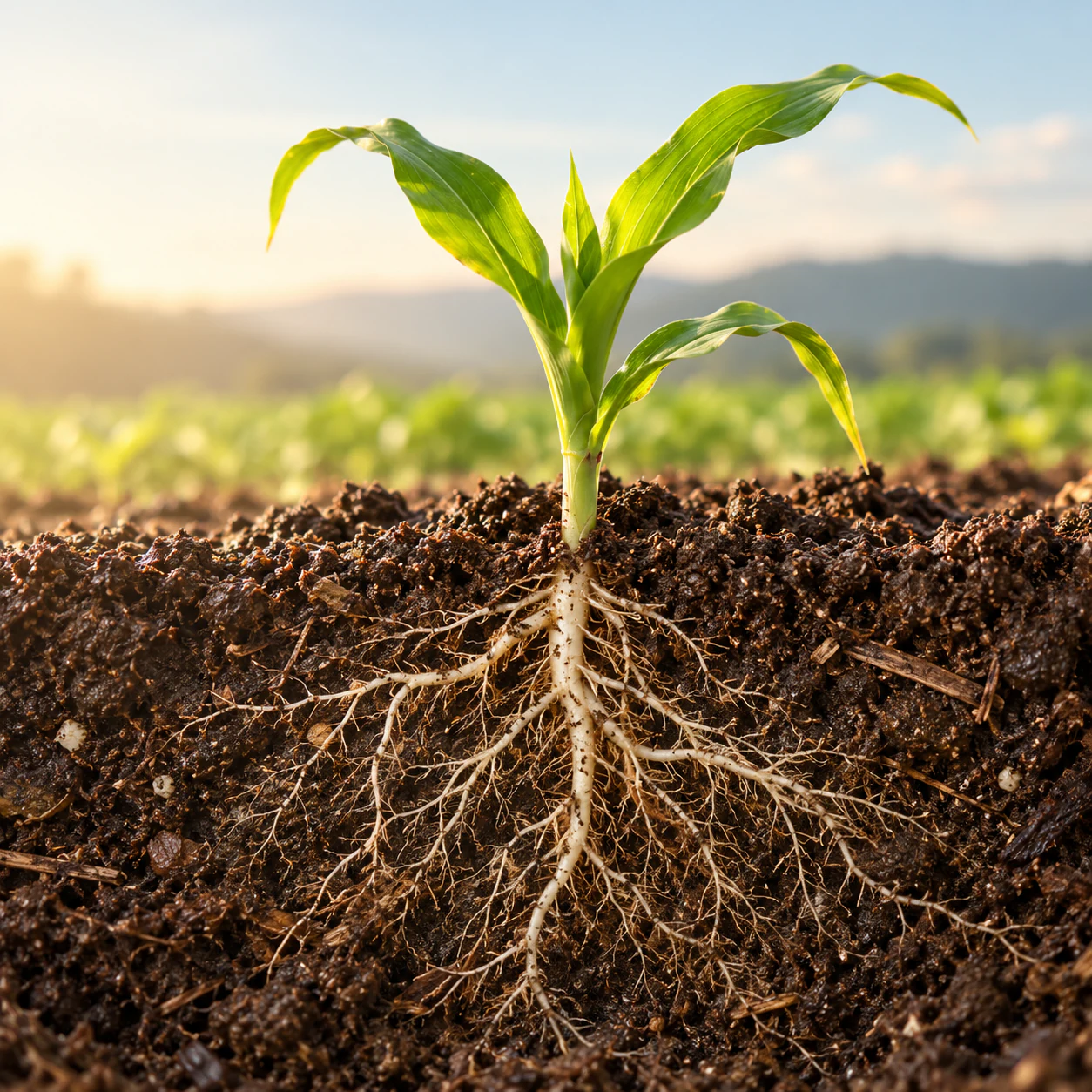
    Plant on raised beds and correct acidity

    Chili does not tolerate flooding. Use raised beds on land that drains, and lime acidic soils before transplanting.

    Technical detail
    • Sarawak: beds 15 to 30 cm high, 1.0 to 1.2 m wide, 50 to 100 cm apart; dolomite at 100 to 200 g/m².
    • Balitsa (lowland system): beds 1.5 to 1.75 m wide with drains 0.5 to 0.6 m deep; lime 2 to 4 weeks before planting if pH is below 5.6.
    • Flat planting is acceptable only where the land never waterlogs.
    Regions
    Indonesia · Malaysia
    Confidence
    High confidence: several institutional sources agree
    • Conventional
    • Crop care
    • Stage: Field establishment

    Silver plastic mulch on beds

    Silver reflective plastic mulch suppresses weeds and reduces aphids, which spread viruses.

    Technical detail
    • Lay the mulch on the formed bed before transplanting and punch planting holes at the chosen spacing.
    • Plastic must be collected and removed after the crop.
    Regions
    Malaysia · Widely used in Southeast Asia
    Confidence
    Medium confidence: one institutional guide
    • Biological & regenerative
    • Crop care
    • Stage: Field establishment

    Straw mulch as a low-input alternative

    A 5 cm layer of rice straw (about 10 t/ha) keeps soil moist, suppresses weeds and reduces thrips in the dry season, and adds organic matter as it breaks down.

    Technical detail
    • Balitsa uses straw mulch in the shallot to chili relay system, applied after the shallot harvest.
    • Straw does not reflect light, so it gives less aphid deterrence than silver plastic.
    Regions
    Indonesia
    Confidence
    Medium confidence: one institutional guide
    • Conventional
    • Soil & nutrition
    • Stage: Field establishment

    Basal manure plus regular side dressing

    Work in decomposed manure and a compound fertilizer before transplanting, then feed little and often while the crop is picking.

    Technical detail
    • Sarawak: 1 to 2 kg/m² well-decomposed chicken manure plus 30 g/m² NPK compound 1 to 2 weeks before transplanting; side dress 15 to 30 g per plant every 1 to 2 weeks until the crop ends.
    • Balitsa: TSP 150 to 200 kg/ha basal; urea, ZA and KCl split into thirds at 4, 7 and 10 weeks after planting.
    • Use fresh manure only after composting; adjust rates to a soil test.
    Regions
    Indonesia · Malaysia
    Confidence
    High confidence: several institutional sources agree
    • Core practice
    • Water
    • Stage: Vegetative growth

    Water at the root, early in the day

    Splashing water spreads anthracnose. Use drip or furrow irrigation where possible, and if watering overhead, do it early so leaves dry before evening.

    Technical detail
    • Keep soil evenly moist in hot weather; Sarawak advises watering twice daily in hot spells.
    • Never let beds stand in water.
    Regions
    Widely applicable
    Confidence
    High confidence: several institutional sources agree
    • Core practice
    • Crop care
    • Stage: Vegetative growth

    Stake early and prune low branches

    Install stakes about one month after transplanting to carry the fruit load and stop plants lodging.

    Technical detail
    • Balitsa prunes side shoots up to 25 cm above the soil at about two months, which improves airflow near the ground.
    Regions
    Indonesia · Malaysia
    Confidence
    Medium confidence: one institutional guide
    • Core practice
    • Pests & disease
    • Stage: Vegetative growth

    Monitor with traps before spraying

    Sticky traps show when thrips and whiteflies build up, and methyl eugenol traps catch male fruit flies. Spray only registered products, and only when monitoring shows a need.

    Technical detail
    • Balitsa: 40 blue, white or yellow sticky traps per hectare, re-oiled weekly.
    • Methyl eugenol traps: 40 per hectare from two weeks after planting, refreshed every two weeks.
    • Main pests: thrips, aphids, mites, fruit borers, fruit flies and whiteflies.
    Regions
    Indonesia · Malaysia
    Confidence
    High confidence: several institutional sources agree
    • Core practice
    • Pests & disease
    • Stage: Flowering & fruit set

    Manage anthracnose with sanitation and rotation

    Anthracnose thrives around 27°C with humidity above 80%. Pick off and destroy infected fruit, control weeds and volunteer plants, and rotate away from the pepper family.

    Technical detail
    • Do not replant chili where the last crop was diseased; leave a 3 year gap and avoid tomato and eggplant in the rotation.
    • If a fungicide is needed, protective sprays (for example mancozeb or a copper product) start at flowering.
    • Resistant lines exist, but test them locally because the fungus strains vary between sites.
    Regions
    Widely applicable
    Confidence
    High confidence: several institutional sources agree
    • Core practice
    • Pests & disease
    • Stage: Vegetative growth

    Plant resistant varieties against bacterial wilt; rogue virus plants

    Bacterial wilt has no effective chemical control, so variety choice and well-drained land are the main defences. Pull and destroy plants showing virus symptoms.

    Technical detail
    • Sarawak names local wilt-resistant varieties; Indonesian equivalents still to be added.
    • Removing virus-infected plants early reduces the source for insects to spread.
    Regions
    Widely applicable
    Confidence
    Medium confidence: one institutional guide
    • Core practice
    • Harvest
    • Stage: Harvest

    Pick often, in cool hours, with the stalk on

    Harvest begins about 70 to 75 days after transplanting in the lowlands and continues every 3 to 4 days.

    Technical detail
    • Pick in the morning or late afternoon using secateurs, keeping the stalk on the fruit.
    • Fresh-market fruit should be mature but firm.
    • Remove rotten fruit from the field at each picking rather than dropping it on the bed.
    Regions
    Indonesia · Malaysia
    Confidence
    High confidence: several institutional sources agree
    • Core practice
    • Establishment
    • Stage: Field establishment

    Pick lines tested in the highlands

    Chili lines do not perform the same in the highlands and lower areas. Balitsa trials found some lines yield well only at Lembang, so use varieties tested at your altitude.

    Technical detail
    • Balitsa (2009) compared lines at Lembang (1,250 m) and Garut (600 m). Lines 349-1, SF-1, SF-2 and SFK-2 showed high yield potential only at Lembang.
    • In a later Balitsa trial at Lembang (2016), the line YK-2 out-yielded the checks Perisai and Tanjung-2 in that trial.
    • BPTP Bengkulu (2021) lists the cayenne varieties Prima Agrihorti and Rabani Agrihorti as suited to the highlands.
    Regions
    Indonesia (West Java highlands)
    Confidence
    Medium confidence: one institutional guide
    • Conventional
    • Crop care
    • Stage: Field establishment

    Double rows on mulched beds

    Highland trials in Indonesia used plastic-mulched beds with two rows of plants at moderate spacing.

    Technical detail
    • Balitsa's Lembang and Garut trial used black-silver plastic mulch, two rows per bed and 60 x 50 cm spacing.
    • A BPTP Lampung highland system used 60 to 80 cm between rows and 50 to 60 cm in the row, about 17,000 plants/ha, in a double-row triangle on black plastic mulch.
    • These were trial layouts, not a single official highland standard. Remove used plastic after the crop.
    Regions
    Indonesia
    Confidence
    Medium confidence: one institutional guide
    • Core practice
    • Crop care
    • Stage: Flowering & fruit set

    Expect slower flowering in cool highlands

    Cooler weather slows chili down. Plan the picking calendar and labour for a later start than in the lowlands.

    Technical detail
    • Balitsa (2009), citing earlier work: highland chili starts flowering in weeks 5 to 14, against weeks 4 to 11 in the lowlands.
    • The same trial noted transplant shock when seedlings raised in the Lembang nursery were moved to the warmer Garut site. Harden seedlings in conditions close to the field.
    • No source fetched gives a fixed highland planting month; match timing to local rainfall.
    Regions
    Indonesia (West Java highlands)
    Confidence
    Medium confidence: one institutional guide
    • Biological & regenerative
    • Pests & disease
    • Stage: Vegetative growth

    Plan for whitefly and yellow leaf curl virus in humid highlands

    Do not assume highlands are free of virus. In one Lampung comparison, whitefly and yellow virus were serious in the highland site and absent in the lowland site.

    Technical detail
    • BPTP Lampung recorded 60% whitefly attack and 60% yellow virus in highland Sukau, against none found at the lowland site. Anthracnose was 30% in the highland and 25% in the lowland.
    • Yellow leaf curl is a whitefly-spread geminivirus; losses can reach 100%. The integrated (PTT) package there used yellow sticky traps at 40/ha, a 3-row maize barrier planted at least 30 days before transplanting, and weekly monitoring.
    • BPTP Bengkulu adds removal of alternate weed hosts and conserving predators. In the Lampung trial, varieties Lado and TM 3044 grew better under virus pressure than Perosa.
    Regions
    Indonesia (Sumatra highlands)
    Confidence
    Medium confidence: one institutional guide
Regional notes

How practice differs by region

  • Indonesia (Java lowlands)

    Balitsa's relay system plants chili into a shallot crop about one month after the shallots, using straw mulch and trap-based IPM.

  • Malaysia (Sarawak)

    Raised beds with silver plastic mulch, dolomite liming and frequent side dressing.

  • Pacific Islands

    Emphasis on hot-water seed treatment, rotation and minimal fungicide use against anthracnose.

  • Research gap

    Highland Indonesia

    Highland chili in Indonesia is grown on mulched raised beds much like lowland chili, but trials show three differences. Some lines yield well only at high sites such as Lembang (1,250 m), so variety choice should come from highland trials. Flowering starts later in cool weather. And disease is not lower by default: anthracnose fungus favours about 20 to 24 °C, and a Lampung highland site had heavy whitefly and yellow virus that were absent at the lowland site. A Balitsa highland planting calendar and a direct highland vs lowland anthracnose comparison from Lembang or Garut were not found in fetched sources.

Common mistakes

What to avoid, and what to do instead

  • AvoidPlanting on flat land that floods after heavy rain.
    InsteadBuild raised beds with drains, or choose higher ground.
  • AvoidOverhead watering in the evening.
    InsteadWater at the base, or early in the day.
  • AvoidLeaving rotten fruit on the plant or bed.
    InsteadCollect and destroy infected fruit at every picking.
  • AvoidFollowing chili with tomato or eggplant.
    InsteadRotate with an unrelated crop for 3 years after disease.
  • AvoidSpraying on a fixed calendar without checking pests.
    InsteadUse sticky and pheromone traps and spray only when needed.
Sources

Numbered sources

This page summarises the sources below. Check the original documents for full context.

  1. Chilli cultivation (opens in a new tab)Department of Agriculture Sarawak, Malaysia
  2. Penerapan PHT pada sistem tanam tumpanggilir bawang merah dan cabai (Monografi No. 19) (opens in a new tab)Moekasan, Prabaningrum & Ratnawati, Balitsa (Indonesian Vegetable Research Institute), 2005
  3. Capsicum and chilli anthracnose, fact sheet 177 (opens in a new tab)Pacific Pests & Pathogens (Lucidcentral / ACIAR)
  4. Uji Adaptasi beberapa Galur Cabai Merah di Dataran Medium Garut dan Dataran Tinggi Lembang (opens in a new tab)Kusmana, R. Kirana, I.M. Hidayat, Y. Kusandriani; Balitsa, J. Hort. 19(4), 2009
  5. Keragaan Tiga Galur Lanjut Cabai Merah pada Ekosistem Dataran Tinggi Lembang, Jawa Barat (opens in a new tab)Kusmana, Y. Kusandriani, R. Kirana, L. Lukman; Balitsa, J. Hort. 26(2), 2016
  6. Budidaya, Produksi Benih dan Pascapanen Cabai Merah (opens in a new tab)K. Dinata et al.; BPTP Bengkulu, Ministry of Agriculture, 2021
  7. Perkembangan Penyakit Virus Kuning pada Tiga Musim Tanam dengan Pola PTT di Sukau, Lampung Barat (opens in a new tab)N. Wardani; BPTP Lampung, Ministry of Agriculture (trials 2003 to 2005; year not stated)
  8. Keragaan Hama/Penyakit pada Cabai Merah di Daerah dengan Ketinggian dan Jenis Tanah yang Berbeda (opens in a new tab)N. Wardani; BPTP Lampung, Ministry of Agriculture (2006 season trial; year not stated)
THE NEXT STEP
LET'S CULTIVATE PROGRESS

Better soil starts
with better decisions.

Turn soil insights into practical action, from testing to targeted improvement.