Industrial · Perennial shrub, pruned to 1.6 to 1.7 m

Coffee

Coffea arabica, C. canephora · Kopi · Rubiaceae

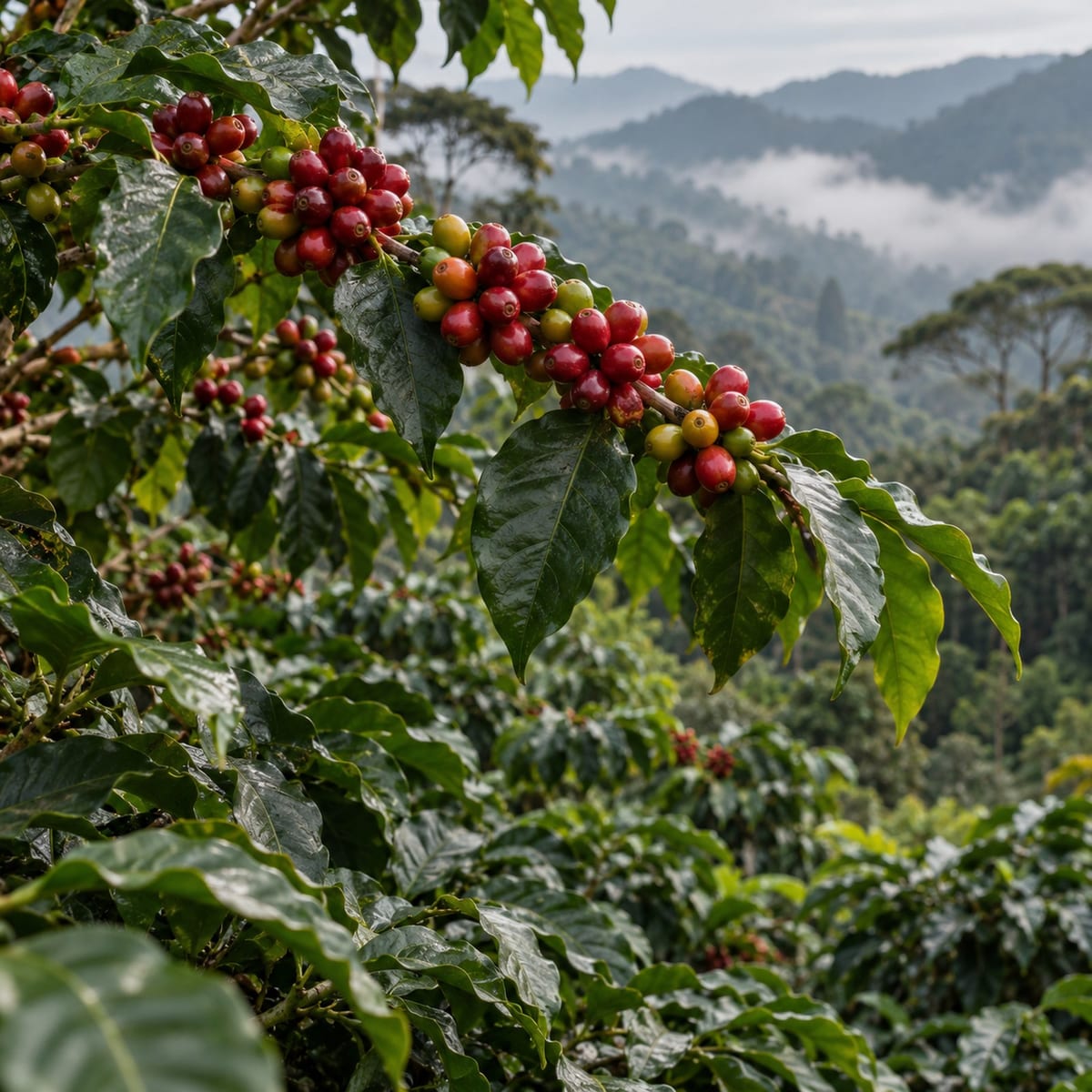
A perennial shrub grown best under managed shade. Arabica suits highlands and robusta the lowlands. Coffee berry borer and leaf rust are the main threats, so frequent clean picking, resistant varieties and good pruning do most of the work.

  • Tropical highlands & lowlands
  • Tree crop

Summary of cited sources. TERAknow summarises published guidance from the sources linked on each page. Recommendations are general, not guaranteed: results depend on your soil, climate and variety, so confirm with local extension staff or an agronomist before acting.

Key facts

Site and soil at a glance

Soil pH
5.6 to 6.5[1]
Altitude
Arabica above 1,000 m; robusta 40 to 900 m[2]
Rainfall
1,500 to 3,500 mm/yr; at most 3 dry months[2]
Spacing
2 x 2.5 m to 2.5 x 2.5 m; 5 x 2.5 m in mixed gardens[2]
Shade
About 25 to 50% of light reaching the coffee[3]
Harvest
8 to 10 months after flowering; red cherries only[1]
Soil pH band: 5.6 to 6.5
Good practice

Practices by growth stage

Pick a stage, topic or approach to narrow the list. Open a card for technical detail and its sources.

Growth stage
Topic
Approach

Showing 11 of 11 practices.

    • Core practice
    • Establishment
    • Stage: Site & shade establishment

    Match species to altitude and prepare holes early

    Arabica needs cool highlands and robusta suits the lowlands. Dig planting holes months ahead and fill them with manure or compost.

    Technical detail
    • Puslitkoka/ICRAF: arabica above 1,000 m (ideally 1,000 to 1,500 m), robusta 40 to 900 m, liberica 0 to 40 m. The Philippine technoguide gives arabica 900 to 1,800 m and robusta 600 to 1,200 m, so check local advice.
    • Holes 60 x 60 x 60 cm, dug 6 months before planting and filled with manure or compost.
    • Use contour terraces on slopes.
    Regions
    Indonesia · Philippines
    Confidence
    High confidence: several institutional sources agree
    • Biological & regenerative
    • Crop care
    • Stage: Site & shade establishment

    Plant shade trees a year before the coffee

    Shade moderates heat, and shade-tree litter adds nutrients and holds soil moisture. Both Indonesian and Philippine guides plant shade one year ahead.

    Technical detail
    • Puslitkoka/ICRAF: about 400 to 800 permanent shade trees per hectare, such as Leucaena, Gliricidia and Erythrina (dadap), planted north to south. Timber trees go on the edges.
    • ICRAF: avoid coconut and cacao (similar root depth) and banana (nematode host). Keep eucalyptus or casuarina more than 10 m away.
    • In the Sumberjaya (Lampung) study cited by ICRAF, coffee under Gliricidia and Erythrina generally did best from year 4.
    Regions
    Indonesia · Philippines
    Confidence
    High confidence: several institutional sources agree
    • Core practice
    • Crop care
    • Stage: Productive trees

    Keep shade moderate by pruning shade trees

    Too dense and too open shade can both raise pest and disease levels. ICRAF describes about 25 to 50% of light reaching the coffee as the optimum for fruiting.

    Technical detail
    • Puslitkoka: at the start of the rainy season, cut about half of the shade trees back to about 3 m, keeping about 3 main branches.
    • ICRAF: leave at least 5 m between the coffee and shade canopy for productive coffee, and thin trees with overlapping crowns.
    • Pacific Pests lists shade, spacing and soil nutrition as critical cultural factors for leaf rust.
    Regions
    Indonesia
    Confidence
    High confidence: several institutional sources agree
    • Core practice
    • Crop care
    • Stage: Formation

    Train stems early and renew old wood

    Form a single or multi-stem frame before fruiting, then remove spent wood after each harvest. Old trees can be rejuvenated rather than replaced.

    Technical detail
    • Puslitkoka tops robusta at about 170 cm; the Philippine guide caps the main stem at about 1.6 m in year 3. Remove suckers and excess branches.
    • After harvest, cut dead, crossing and unproductive branches, especially those that have fruited 3 to 5 times.
    • For trees about 10 to 30 years old, the Philippine guide prefers side pruning over full stumping (about 30 cm above ground) because side pruning keeps part of the crop.
    Regions
    Indonesia · Philippines
    Confidence
    High confidence: several institutional sources agree
    • Conventional
    • Soil & nutrition
    • Stage: Productive trees

    Fertilise twice a year, at the start and end of the rains

    Place fertiliser 30 to 50 cm from the trunk and cover it with soil. Prune shade trees first so the coffee can use the nutrients.

    Technical detail
    • Puslitkoka gives doses of urea, SP-36, KCl and dolomite that rise with tree age. For demanding varieties it suggests at least 0.5 kg chemical fertiliser plus 10 kg manure per tree. This is from one guide; adjust to a soil test.
    • Philippine guide: 75 g of 14-14-14 per tree at planting.
    • Add manure or compost alongside mineral fertiliser.
    Regions
    Indonesia · Philippines
    Confidence
    High confidence: several institutional sources agree
    • Biological & regenerative
    • Soil biology
    • Stage: Productive trees

    Dig rorak pits and keep leaf litter

    Rorak are small trenches beside the trees that collect organic matter and improve root aeration. Shade-tree litter adds nutrients and holds moisture in dry spells.

    Technical detail
    • Puslitkoka/ICRAF: rorak about 60 to 80 cm long, 30 cm wide and 40 to 50 cm deep.
    • Fill rorak with prunings and litter. Leave leaf litter on the ground rather than burning it.
    Regions
    Indonesia
    Confidence
    Medium confidence: one institutional guide
    • Core practice
    • Pests & disease
    • Stage: Harvest

    Break the berry borer cycle with frequent, complete picking

    The borer breeds inside berries and survives between crops in dry berries on the tree and the ground. Picking often and stripping all berries at season end removes its breeding sites.

    Technical detail
    • Pacific Pests: pick ripe berries at least every 2 weeks (2 to 3 weeks in hotspots), strip all berries at the end, and collect fallen berries. Aim for fewer than five ripe, overripe or raisin berries per tree.
    • Destroy infested berries: seal them in bins or bags in the sun for 2 weeks, bury at least 15 cm deep, or burn.
    • Area-wide action, where neighbours do the same, gives better control. Destroy abandoned plantings.
    Regions
    Widely applicable · Pacific
    Confidence
    High confidence: several institutional sources agree
    • Biological & regenerative
    • Pests & disease
    • Stage: Productive trees

    Use Beauveria and alcohol traps against berry borer

    The fungus Beauveria bassiana infects adult borers, and alcohol-baited traps catch flying females.

    Technical detail
    • Puslitkoka uses Beauveria bassiana strain 705 and Hypotan traps at 25 per hectare.
    • Pacific Pests reports about 80% adult mortality from Beauveria in consistently humid countries. Traps with a methanol to ethanol mix of 3:1 are used in organic coffee in Mexico.
    • Put traps at processing sites too, so beetles do not escape back to the field.
    Regions
    Indonesia · Latin America
    Confidence
    High confidence: several institutional sources agree
    • Conventional
    • Pests & disease
    • Stage: Productive trees

    Monitor berry borer and spray only early, if needed

    Insecticides work only while the female is still in the entry tunnel. Sample trees to find hotspots and time any spray.

    Technical detail
    • Hawaii CoffeeEd uses a 30-tree sampling method to estimate infestation and decide when to spray.
    • Pacific Pests suggests spraying hotspots above 2% infestation. Use only products registered locally and follow the label.
    • Fallen berries are hard to treat, so sanitation remains the base.
    Regions
    Pacific · Widely applicable
    Confidence
    High confidence: several institutional sources agree
    • Core practice
    • Pests & disease
    • Stage: Productive trees

    Plant rust-resistant varieties; protect with copper where needed

    Rust spores spread on wind and insects and need water to germinate. Resistant varieties are the first defence; copper protects susceptible trees.

    Technical detail
    • Puslitkoka lists resistant varieties S 795, Andungsari 2K, Gayo 1 and Komasti. Pacific Pests gives Catimor as an example.
    • Puslitkoka: copper fungicide at 0.3% every 2 weeks, or triadimefon 0.1% as a systemic. Pacific Pests notes sprays are usually not needed above 1,700 m.
    • Puslitkoka also mentions mahogany leaf extract as a botanical option.
    Regions
    Indonesia · Pacific
    Confidence
    High confidence: several institutional sources agree
    • Core practice
    • Harvest
    • Stage: Post-harvest

    Pick red cherries and dry off the ground

    Selective picking of ripe red cherries gives better quality. Dry quickly on raised racks, not on bare soil.

    Technical detail
    • Sort out green and black fruit after picking.
    • Philippine guide: start drying within 12 hours of harvest and sun-dry to 12 to 14% moisture.
    • Poorly dried beans let berry borers keep breeding in storage.
    Regions
    Indonesia · Philippines
    Confidence
    High confidence: several institutional sources agree
Regional notes

How practice differs by region

  • Indonesia (Sulawesi, Lampung)

    Puslitkoka and ICRAF guides grow coffee in mixed gardens under Gliricidia, Leucaena or Erythrina, with timber and fruit trees on the edges.

  • Philippines

    The Department of Agriculture technoguide prefers side pruning over full stumping for rejuvenation and dries cherries to 12 to 14% moisture.

  • Pacific and Hawaii

    Berry borer control relies on area-wide sanitation, Beauveria and sampling before spraying.

  • Research gap

    Indonesia berry borer thresholds

    Local spray thresholds and currently registered products still to be added.

Common mistakes

What to avoid, and what to do instead

  • AvoidPlanting shade trees at the same time as the coffee.
    InsteadPlant shade one year ahead.
  • AvoidLeaving overripe and fallen cherries after harvest.
    InsteadStrip-pick at season end and destroy infested berries.
  • AvoidDrying beans on bare ground.
    InsteadUse raised racks and start drying within 12 hours.
  • AvoidLetting shade grow dense or removing it entirely.
    InsteadPrune shade so roughly 25 to 50% of light reaches the coffee.
  • AvoidIntercropping with banana or coconut.
    InsteadChoose Gliricidia, Leucaena, Erythrina or fruit trees instead.
Sources

Numbered sources

This page summarises the sources below. Check the original documents for full context.

  1. Coffee Technoguide (opens in a new tab)Agricultural Training Institute, Department of Agriculture, Philippines (cites BPI and Cavite State University; year not stated)
  2. Pedoman Budi Daya dan Pemeliharaan Tanaman Kopi di Kebun Campur (opens in a new tab)Hulupi R. (Puslitkoka / ICCRI) and Martini E.; AgFor Sulawesi and World Agroforestry Centre (ICRAF) Southeast Asia, 2013
  3. Guidelines for Establishing Coffee-Agroforestry Systems (opens in a new tab)Martini E., Riyandoko, Roshetko J.M.; World Agroforestry Centre (ICRAF) Southeast Asia, Bogor, 2017
  4. Coffee leaf rust (Fact sheet 141) (opens in a new tab)Jackson G.; Pacific Pests, Pathogens, Weeds & Pesticides, 2025
  5. Coffee berry borer (Fact sheet 118) (opens in a new tab)Jackson G.; Pacific Pests, Pathogens, Weeds & Pesticides, 2025
  6. Coffee Berry Borer (IPM steps) (opens in a new tab)Hawaii CoffeeEd, linked from University of Hawaii CTAHR CBB-IPM page (year not stated)
THE NEXT STEP
LET'S CULTIVATE PROGRESS

Better soil starts
with better decisions.

Turn soil insights into practical action, from testing to targeted improvement.