
Fruits · Long-lived evergreen tree

Mango

Mangifera indica · Mangga · Anacardiaceae

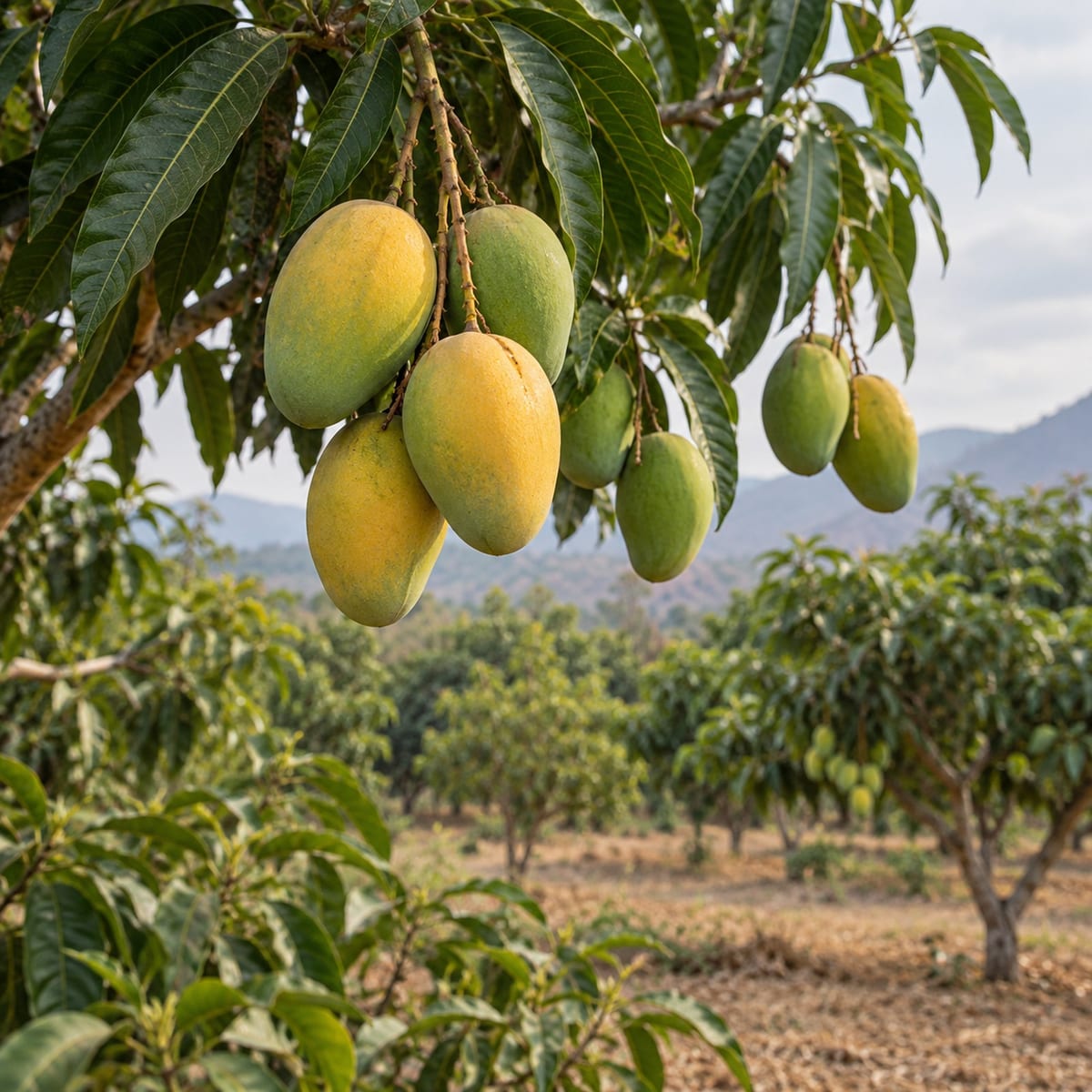
A tree crop that flowers best after a clear dry season. Grafted trees, an open canopy and planned flower induction set up the crop. Fruit flies and anthracnose cause most of the losses, so trapping, bagging and sanitation matter as much as sprays.

  • Seasonally dry tropics
  • Tree crop

Summary of cited sources. TERAknow summarises published guidance from the sources linked on each page. Recommendations are general, not guaranteed: results depend on your soil, climate and variety, so confirm with local extension staff or an agronomist before acting.

Key facts

Site and soil at a glance

Climate
0 to 500 m altitude, 4 to 8 dry months a year (Indonesian guide)[1]
Soil pH
5.5 to 7.5; lime if below 5.5[1]
Soil
Deep, well-drained soil; poorly drained sites are unsuitable[2]
Spacing
10 x 10 m (100 trees/ha) or 6 to 7 x 8 to 9 m in Indonesia[1]
First crop
Grafted trees bear 3 to 5 years after planting[2]
Harvest
107 to 115 days after bloom for Arumanis and Gedong[1]
Soil pH band: 5.5 to 7.5
Good practice

Practices by growth stage

Pick a stage, topic or approach to narrow the list. Open a card for technical detail and its sources.

Growth stage
Topic
Approach

Showing 11 of 11 practices.

    • Core practice
    • Establishment
    • Stage: Planting

    Plant healthy grafted trees in prepared pits

    Grafted trees come true to type and bear earlier than seedlings. Plant at the start of the rainy season into pits filled with organic matter.

    Technical detail
    • Indonesian guide: grafted plants at least 30 cm above the graft union (over 100 cm preferred), at least 4 months after grafting, with 2 flushes. Harden them in shade for at least 2 weeks.
    • Pits 60 x 60 x 60 cm in loose soil, 100 x 100 x 100 cm in dry or clay soil. That guide fills each pit with 20 kg organic fertilizer, 100 g NPK 15:15:15 and 250 g dolomite; adjust to a soil test.
    • UF/IFAS: avoid root-bound nursery trees, and plant on a 2 to 3 ft mound if the site can flood.
    Regions
    Indonesia · Widely applicable
    Confidence
    High confidence: several institutional sources agree
    • Biological & regenerative
    • Soil biology
    • Stage: Planting

    Build soil organic matter with compost and green manure

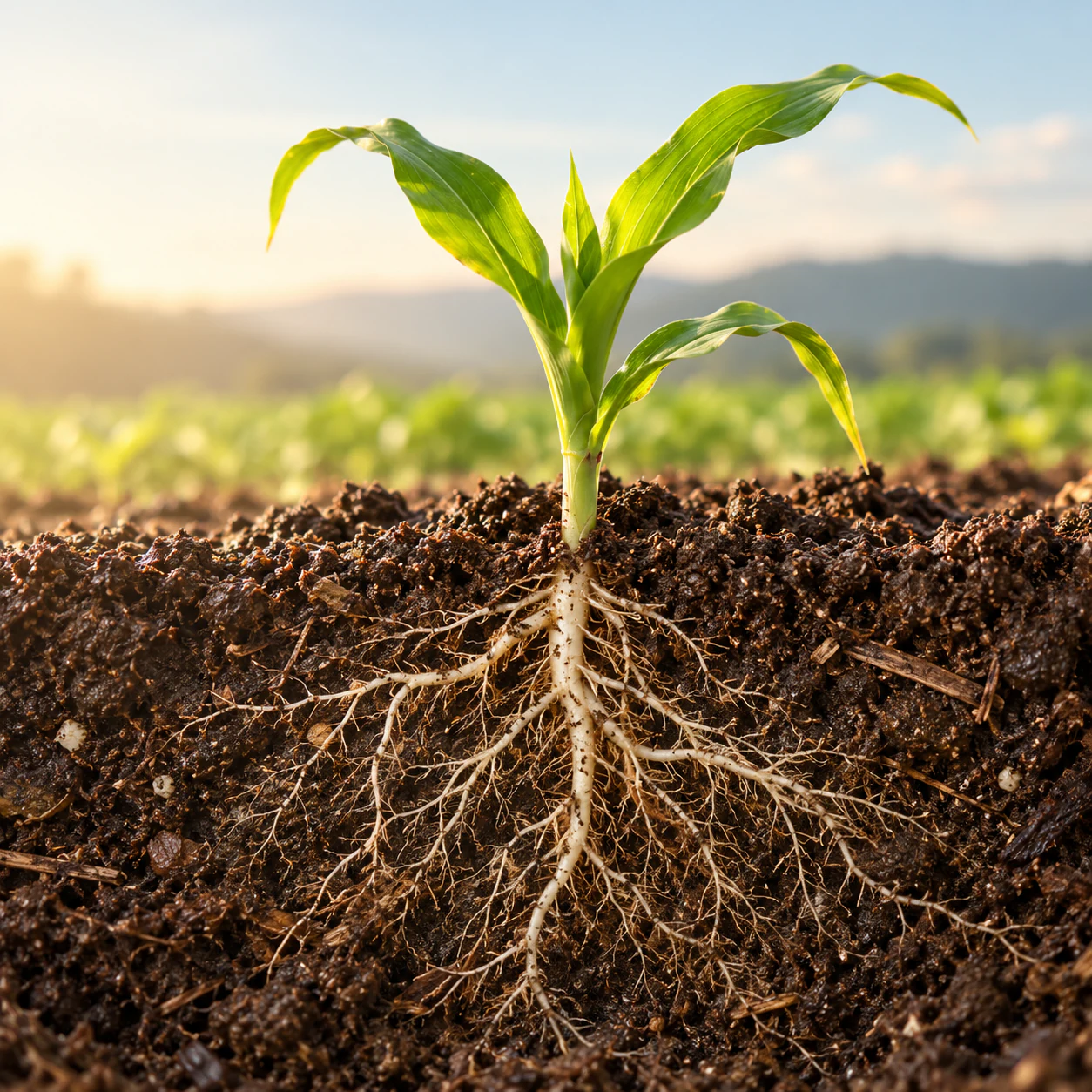
    Organic guides in Tamil Nadu fill pits with farmyard manure and vermicompost, and grow green manure between rows.

    Technical detail
    • TNAU organic scheme: 20 kg FYM and 5 kg vermicompost per pit, with Azospirillum and Phosphobacteria inoculants.
    • Later, 10 to 20 kg compost per tree per year, and sunhemp or dhaincha sown as green manure with the monsoon.
    • These are rates from one guide; adjust to a soil test.
    Regions
    India (Tamil Nadu)
    Confidence
    Medium confidence: one institutional guide
    • Core practice
    • Crop care
    • Stage: Canopy building

    Train an open, low canopy

    A low, open canopy dries faster after rain, reduces anthracnose and makes bagging and picking easier.

    Technical detail
    • Indonesian 1-3-9-27 system: start at 80 to 120 cm height, keep 2 to 3 main branches at wide angles, then 9 secondary and 27 tertiary branches.
    • Maintenance pruning from about 2.5 to 3 years keeps the canopy 2 to 3.5 m tall. Pacific Pests advises keeping trees under about 4 m.
    • UF/IFAS: prune soon after harvest. Severe pruning reduces cropping for one or more seasons.
    Regions
    Indonesia · Pacific
    Confidence
    High confidence: several institutional sources agree
    • Conventional
    • Soil & nutrition
    • Stage: Canopy building

    Feed young and bearing trees in splits

    Increase fertilizer with tree age and split it through the year. Give most before flowering and the rest when fruit is marble sized.

    Technical detail
    • Indonesian guide for Arumanis, year 1: 20 kg organic fertilizer, 250 g urea, 100 g SP-36 and 250 g KCl per tree, rising each year.
    • For bearing trees, that guide gives two thirds early and one third when fruit is marble sized, with at least 1 week between organic and mineral fertilizer.
    • UF/IFAS: reduce nitrogen and raise potash on bearing trees. These are rates from single guides; adjust to a soil or leaf test.
    Regions
    Indonesia · Widely applicable
    Confidence
    High confidence: several institutional sources agree
    • Conventional
    • Crop care
    • Stage: Pruning & flower induction

    Use paclobutrazol only on healthy, well-sized trees

    Paclobutrazol, applied as a soil drench at the trunk, can give earlier and more even flowering. Dose goes by tree size, not age.

    Technical detail
    • NT Agnote: collar drench mixed in about 1 L of water after harvest; foliar sprays were ineffective. Do not treat weak trees.
    • Wait until trees have a good canopy: about 3 years in high-density blocks and about 5 years at 10 m spacing.
    • Overdosing compacts flowers and shoots. Paclobutrazol can leave soil residues and is not allowed in organic systems. Follow the local label.
    Regions
    Australia · Indonesia · Latin America
    Confidence
    High confidence: several institutional sources agree
    • Biological & regenerative
    • Crop care
    • Stage: Pruning & flower induction

    Tip pruning as a non-chemical flowering aid

    Pruning branch tips after harvest raised flowering in a Brazilian trial. Organic growers rely on pruning, irrigation and nutrition timing instead of growth regulators.

    Technical detail
    • In 'Uba' mango, unpruned trees flowered about 41% and tip-pruned trees about 84% without paclobutrazol (one trial).
    • A 2021 review calls for more research on pruning, girdling, fertilization and irrigation as organic options. Results are still limited.
    Regions
    Latin America · Widely applicable
    Confidence
    Emerging evidence: early or small-scale evidence
    • Core practice
    • Pests & disease
    • Stage: Flowering & fruit set

    Prevent anthracnose from flowering onward

    Anthracnose spreads by rain splash and thrives in humid, dense canopies. Remove dead twigs and fallen leaves, keep the canopy open, and protect flowers and young fruit.

    Technical detail
    • Pacific Pests: start protective sprays when flowers first appear and repeat every 3 to 4 weeks up to the pre-harvest interval. Products named for Australia include mancozeb, azoxystrobin and copper.
    • UF/IFAS: sprays after infection have no effect; coat new growth before infection.
    • Use only products registered locally and follow the label.
    Regions
    Widely applicable · Pacific
    Confidence
    High confidence: several institutional sources agree
    • Biological & regenerative
    • Pests & disease
    • Stage: Fruit growth & harvest

    Trap fruit flies and bag fruit early

    Lure traps and fruit bags protect fruit without spraying. Collecting fallen fruit breaks the fly life cycle.

    Technical detail
    • Indonesian guide: 20 to 25 methyl eugenol or protein bait traps per hectare, set at the same time across the orchard.
    • Bag fruit at 1.5 to 2 cm diameter using UV kraft paper, porous nylon or lined plastic bags.
    • TNAU: remove fruit with dimples or oozing sap and clear fallen fruit. The Indonesian guide buries fallen fruit 40 to 50 cm deep.
    Regions
    Indonesia · India (Tamil Nadu)
    Confidence
    High confidence: several institutional sources agree
    • Core practice
    • Water
    • Stage: Fruit growth & harvest

    Water during fruit growth, then taper before harvest

    Mature trees need water while fruit sizes, but too much water causes root rot and poor fruit quality.

    Technical detail
    • Indonesian guide: 70 to 100 L per tree per week from ping-pong ball size, reduced to 40 L two weeks before harvest, and none in the last week.
    • UF/IFAS: trees 4 years and older need water only in long droughts; overwatering causes decline.
    Regions
    Indonesia · Widely applicable
    Confidence
    High confidence: several institutional sources agree
    • Core practice
    • Harvest
    • Stage: Fruit growth & harvest

    Pick mature fruit in cool hours and drain the sap

    Harvest when fruit shoulders fill out, in the early morning or late afternoon, with a stalk left on.

    Technical detail
    • Indonesian guide: pick 07.00 to 09.00 or 16.00 to 17.30, leave about 10 cm stalk, and hold the stalk down for about 5 minutes to drain latex.
    • Fruit that sinks in water is mature (TNAU, Kementan).
    • Hot water at 52°C for 5 minutes after harvest reduces anthracnose in storage (Pacific Pests, TNAU).
    Regions
    Indonesia · India (Tamil Nadu) · Pacific
    Confidence
    High confidence: several institutional sources agree
Regional notes

How practice differs by region

  • Indonesia (Java, East Nusa Tenggara)

    The Ministry field guide uses the 1-3-9-27 canopy system, methyl eugenol traps, early bagging and fruit thinning for Arumanis, Gadong and Gedong Gincu.

  • India (Tamil Nadu)

    Organic schemes use red loamy soils, compost and green manure, gypsum before flowering, and botanical sprays against hoppers.

  • Research gap

    Indonesia flower induction rates

    The Ministry guide schedules paclobutrazol for Gedong Gincu but does not give doses. Local rates are still to be added.

Common mistakes

What to avoid, and what to do instead

  • AvoidPlanting seedlings of unknown type.
    InsteadBuy labelled grafted plants from a certified nursery.
  • AvoidLetting the canopy grow tall and dense.
    InsteadPrune after each harvest to keep the tree low and open.
  • AvoidApplying paclobutrazol to young or weak trees, or overdosing.
    InsteadWait for a full canopy, dose by tree size and follow the label.
  • AvoidLeaving fallen fruit under the tree.
    InsteadCollect and bury or destroy it to break the fruit fly cycle.
  • AvoidSpraying fungicide after anthracnose spots appear.
    InsteadProtect flowers and young fruit before infection, and keep the canopy open.
Sources

Numbered sources

This page summarises the sources below. Check the original documents for full context.

  1. Buku Lapang Budidaya Mangga (opens in a new tab)Direktorat Buah dan Florikultura, Ditjen Hortikultura, Kementerian Pertanian RI, 2021
  2. Mango Growing in the Florida Home Landscape (HS2) (opens in a new tab)UF/IFAS Extension; J.H. Crane, J. Wasielewski, C.F. Balerdi, I. Maguire, rev. 2023
  3. Model Bankable Scheme for Organic Cultivation of Mango in Tamil Nadu (opens in a new tab)TNAU Agritech Portal (Tamil Nadu), c. 2007
  4. Mango anthracnose, mango blossom blight (fact sheet 009) (opens in a new tab)Pacific Pests, Pathogens & Weeds; H. Tsatsia and G. Jackson, ACIAR PC/2010/090, online 2025
  5. Flowering and Fruiting in Mangoes in the Top End with Paclobutrazol (Agnote D20) (opens in a new tab)NT Department of Primary Industry, Fisheries and Mines; V. Kulkarni, D. Hamilton, G. McMahon, 2006
  6. Paclobutrazol and branch tip pruning on the flowering induction and quality of mango tree fruits (opens in a new tab)Oliveira et al., Pesquisa Agropecuaria Tropical 47(1), 2017
  7. Flowering induction in mango tree: updates, perspectives and options for organic agriculture (opens in a new tab)Pesquisa Agropecuaria Tropical (review), 2021
THE NEXT STEP
LET'S CULTIVATE PROGRESS

Better soil starts
with better decisions.

Turn soil insights into practical action, from testing to targeted improvement.